
News
Shandong GTECH Chemicals – Jinan-based water treatment supplier. Full-range products, stable quality, customized services. Trusted globally. Partners welcome.
Dispersants Selection Mistakes That Raise Operating Costs
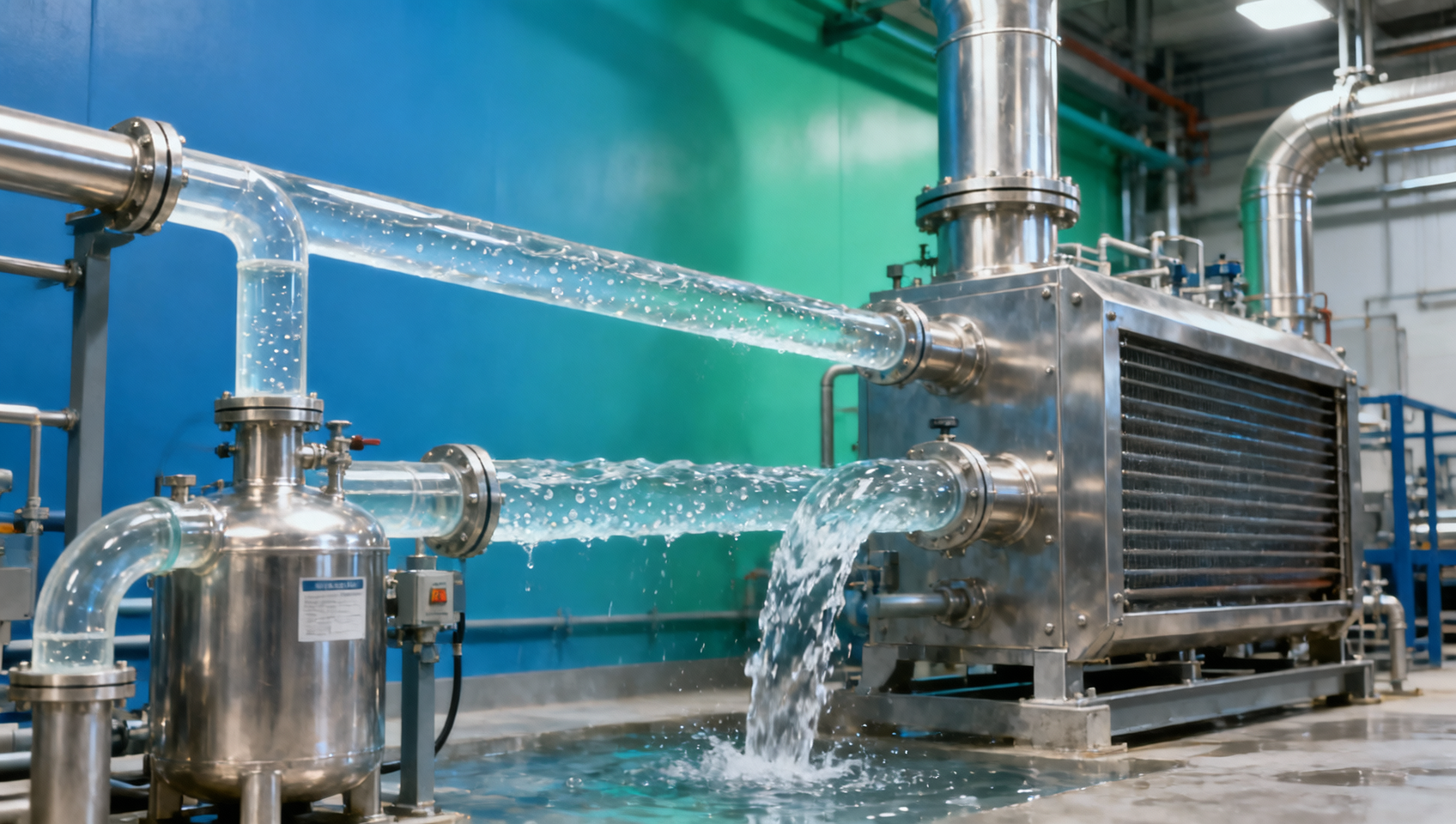
Choosing the wrong Dispersants can quietly increase chemical consumption, downtime, scaling risks and maintenance expenses across water treatment systems. For procurement teams, understanding common selection mistakes is essential to controlling operating costs and securing stable performance. This article explores where buyers often go wrong and how to select more cost-effective, reliable dispersant solutions for long-term industrial use.
In phosphate-related water treatment programs, dispersant selection is rarely a minor purchasing detail. It directly affects deposit control, phosphate stability, heat-transfer efficiency, blowdown rates, and cleaning frequency in circulating cooling water, wastewater treatment, and high-load industrial systems.
For buyers responsible for annual contracts, supplier qualification, and operating cost control, a low unit price can become expensive if the product demands 15% to 30% higher dosage, shortens cleaning cycles, or performs poorly under fluctuating pH and hardness conditions.
Why Dispersant Selection Matters in Phosphate-Based Water Treatment
In phosphate programs, Dispersants help keep calcium phosphate, iron oxide, silt, and suspended solids from forming stubborn deposits. Their role becomes more important when recirculation ratios rise, conductivity increases, or makeup water quality changes across seasons.
A procurement decision made without reviewing operating temperature, hardness, alkalinity, and phosphate treatment goals can create hidden cost pressure within 30 to 90 days. The result is often not immediate failure, but gradual fouling, unstable cycles of concentration, and higher maintenance frequency.
Common cost drivers linked to poor product fit
- Overdosing to compensate for weak calcium phosphate dispersion
- Increased acid cleaning frequency from every 12 months to every 6 to 8 months
- More sludge carryover in clarifiers or side-stream filters
- Loss of heat-transfer efficiency in exchangers and condensers
- Unplanned downtime caused by scaling under peak summer load
Where phosphate systems are most sensitive
Phosphate-based treatment is widely used because it can support corrosion control and deposit management together, but performance depends on balance. If the Dispersants cannot stabilize solids at pH 7.5 to 9.0 or under hardness swings, phosphate can shift from protection chemistry to deposit source.
This is especially relevant in petrochemical, power, metallurgy, papermaking, and municipal reuse applications, where suspended solids, iron, silica, and oil contamination may vary week by week. Procurement teams need products that tolerate real operating windows, not only ideal laboratory conditions.
The table below highlights how selection errors translate into operating costs in phosphate treatment environments.
The key point is simple: in phosphate systems, cost should be evaluated per treated ton of water or per stable operating month, not per kilogram purchased. That shift helps buyers compare true performance instead of invoice appearance alone.
Five Dispersant Selection Mistakes That Raise Operating Costs
Most expensive mistakes are avoidable. They usually happen when procurement works with incomplete technical inputs, limited performance testing, or a specification that focuses on generic chemistry rather than actual phosphate-system conditions.
1. Treating all Dispersants as interchangeable
Different Dispersants vary in molecular structure, tolerance to calcium, ability to control iron and silt, and stability under temperature stress. A product effective at 35°C may not deliver the same deposit control at 50°C to 60°C in high-load circulation loops.
For phosphate programs, this difference matters because calcium phosphate deposition can intensify rapidly once threshold conditions are crossed. One mismatched product may still pass basic qualification but fail during seasonal peaks or under concentration-cycle increases.
2. Specifying dosage before understanding the water profile
Some RFQs ask suppliers to match a fixed dose such as 5 ppm or 8 ppm without sharing hardness, orthophosphate level, iron content, turbidity, or retention time. This creates a false comparison because performance depends on system chemistry, not price at a guessed dosage.
A practical review should include at least 6 items: pH, calcium hardness, alkalinity, phosphate residual, iron, and operating temperature. If two of these are missing, the selected product may require rapid readjustment after startup.
3. Ignoring compatibility with the full treatment package
Dispersants do not work in isolation. In phosphate applications, they interact with phosphates, corrosion inhibitors, biocides, and sometimes coagulants used in side processes. Poor compatibility can reduce dispersing efficiency or create unstable solids that settle in low-flow zones.
Procurement should ask whether the product has been evaluated within blended or coordinated treatment programs, especially where phosphates are used with zinc-free or low-phosphorus operating strategies. This avoids selecting a chemical that looks strong on paper but weak in the combined program.
4. Overlooking lifecycle costs and service response
The purchase price often represents only a fraction of total operating cost. Cleaning shutdowns, lab troubleshooting, dosage changes, and delivery delays can cost far more than a small difference in per-ton chemical pricing over 12 months.
A supplier that responds within 24 to 48 hours, supports dosage optimization, and provides stable batch quality may reduce total cost more effectively than a lower-priced source with inconsistent technical follow-up.
5. Approving products without trial criteria
A field trial should not be limited to “system ran normally.” Buyers need measurable criteria over 2 to 6 weeks, such as deposit tendency, phosphate residual stability, heat-exchanger pressure change, filter loading, and dosage drift under normal operating fluctuations.
Without a structured trial, procurement may lock in annual supply based on incomplete evidence. That is a common reason why a product passes initial approval but creates elevated maintenance cost in the next operating cycle.
Quick review checklist for buyers
- Confirm phosphate program type and target residual range
- Review full water analysis from at least 2 recent sampling periods
- Compare effective dosage range, not only base quotation
- Check compatibility with other treatment chemicals
- Set trial period, acceptance metrics, and response timeline
How Procurement Teams Should Evaluate Dispersants More Effectively
A stronger purchasing process reduces both technical and commercial risk. In phosphate-related water treatment, the goal is to choose Dispersants that maintain control across realistic operating windows, not only during best-case conditions.
An effective review combines technical data, batch consistency, service capability, and cost-per-performance analysis. This approach is especially useful for annual tenders, multi-site supply, and plants with variable makeup water.
Four evaluation dimensions that matter most
The following framework can help procurement compare suppliers in a more practical way. It is designed for phosphate programs in industrial circulating water and related treatment scenarios where deposit control stability is essential.
This type of comparison helps buyers move beyond generic claims. Even if two products look similar in chemical family, the more suitable option may reduce blowdown, cleaning intervals, and corrective dosing over a 6- or 12-month period.
Questions procurement should ask suppliers
- What deposit types is the product primarily designed to control in phosphate systems?
- What dosage range is typically evaluated under medium to high hardness conditions?
- How does performance change when iron or suspended solids rise?
- What production and lab testing steps are used to maintain batch stability?
- What is the normal lead time for repeat orders and emergency replenishment?
Why supplier capability still matters after product approval
In practice, the best Dispersants are supported by stable production, routine testing, and technical service that can adapt to changing plant conditions. This is why many procurement teams assess not only product chemistry, but also manufacturing discipline and communication efficiency.
Shandong GTECH Chemicals Co., Ltd., located in Jinan, Shandong Province, is engaged in the research, development, production, sales, and technical service of water treatment chemicals and environmental protection products. With years of industry experience, standardized production facilities, and professional testing laboratories, the company supports customers seeking reliable and cost-effective water treatment solutions across industrial circulating water, wastewater treatment, municipal water supply, petrochemical, electric power, papermaking, and metallurgy sectors.
Practical Buying Advice for Long-Term Cost Control
For procurement teams in phosphate-related applications, the most reliable path is to connect commercial review with operating evidence. A slightly higher-priced dispersant can still lower total cost if it extends cleaning intervals by 3 to 6 months or reduces dosage volatility during load changes.
This is particularly important where systems operate continuously, where shutdown cost is high, or where make-up water quality varies by season. Stable performance is often more valuable than a narrow purchasing discount.
Recommended procurement process in 5 steps
- Collect recent water data and current phosphate program details
- Define 3 to 5 acceptance indicators for the dispersant trial
- Request dosage guidance and compatibility review from suppliers
- Run a monitored trial for 2 to 6 weeks under normal plant conditions
- Compare total operating impact, not quote price alone
Signs a product is likely to save cost
Look for steady phosphate residual control, manageable filter loading, low deposit tendency, and no need for repeated emergency dosage correction. These are stronger indicators than a single lab result or supplier brochure statement.
When buyers work with suppliers that combine product quality management, testing capability, and technical support, the decision becomes more defensible internally and more sustainable over annual procurement cycles.
Selecting Dispersants for phosphate-based water treatment is ultimately a cost-control decision as much as a chemical decision. The most common mistakes—buying on price alone, skipping compatibility checks, using incomplete water data, and approving products without measurable trials—can all increase operating expense over time.
A careful supplier and product review helps procurement teams reduce scaling risk, stabilize dosage, and improve long-term system performance. If you are evaluating dispersant options for circulating water, wastewater, or phosphate-related treatment programs, contact Shandong GTECH Chemicals Co., Ltd. to discuss your application, request product details, or obtain a customized solution for more reliable and cost-effective operation.
Navigation
- What to Check Before Switching Filming Agents Suppliers
- Filming Agents Adoption Grows in Asset Protection Projects
- Dispersants for Slurry Systems: Key Signs of Underperformance
- Dispersants Selection Mistakes That Raise Operating Costs
- Chelating Agents vs Alternatives for Stable Process Quality
- Chelating Agents in Cleaning Formulas: What Changed in 2026
Send Us A Message