
News
Shandong GTECH Chemicals – Jinan-based water treatment supplier. Full-range products, stable quality, customized services. Trusted globally. Partners welcome.
Dispersants for Slurry Systems: Key Signs of Underperformance
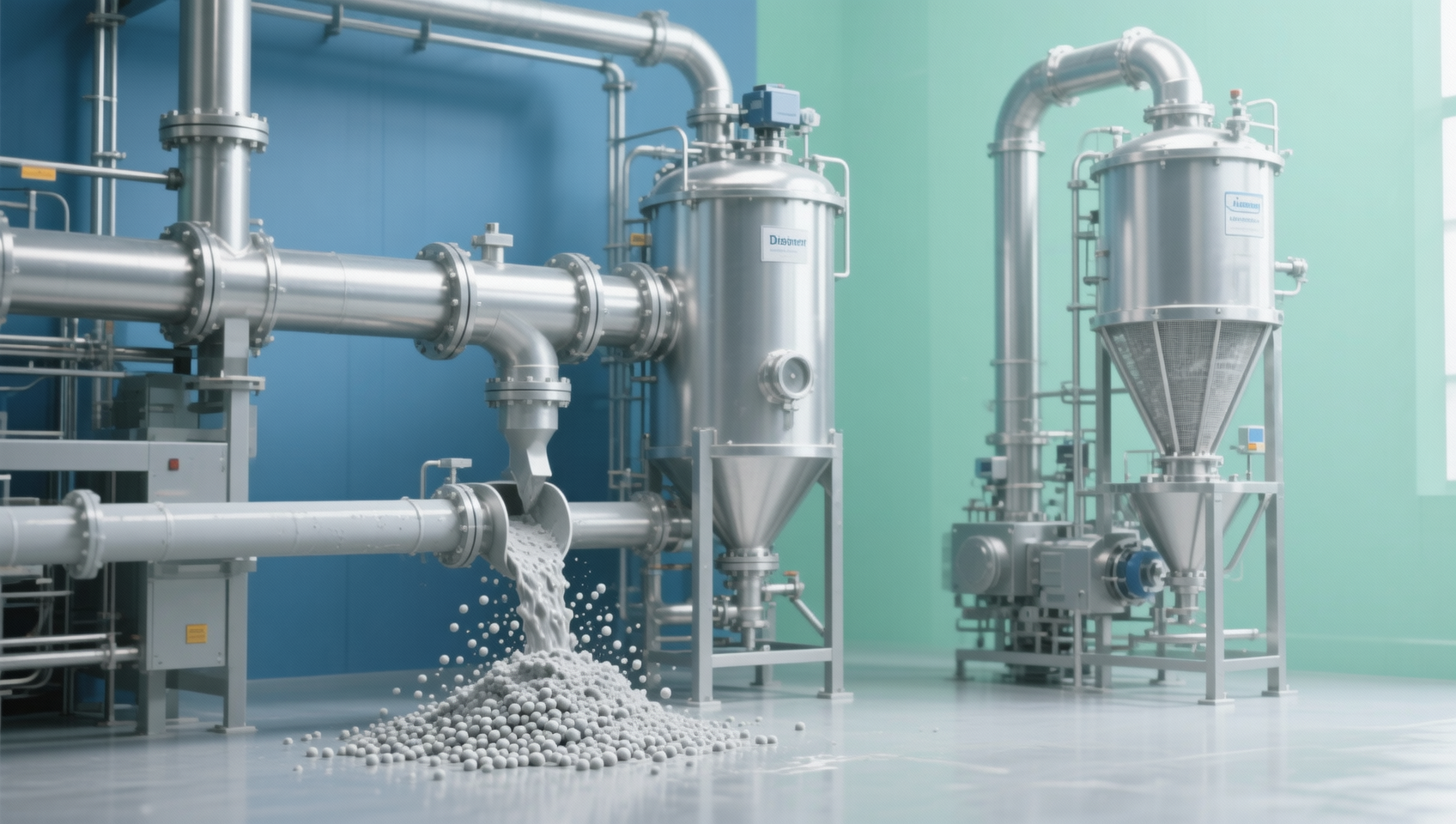
In slurry operations, underperforming Dispersants can quickly lead to higher viscosity, particle settling, pipeline blockage and unstable process efficiency. For operators, recognizing these warning signs early is essential to maintaining smooth production and consistent system performance. This article outlines the key symptoms of dispersant underperformance and offers practical insights to help improve slurry stability, handling and overall operational reliability.
In phosphate processing, slurry stability affects filtration, transfer, reaction efficiency, storage behavior, and downstream product consistency. Whether the system handles phosphate rock fines, wet-process phosphoric acid solids, calcium phosphate intermediates, or wastewater solids, the wrong dispersant response can raise operating risk within 1 to 2 shifts.
For plant operators, the issue is rarely just chemical dosage. Underperformance often involves solids loading, pH fluctuation, ionic strength, temperature change, mixing energy, and residence time. Reading these symptoms early helps reduce unplanned flushing, pump stress, and quality variation in phosphate slurry systems.
Why Dispersant Performance Matters in Phosphate Slurry Systems
Phosphate slurries are often dense, abrasive, and chemically sensitive. In many plants, solids concentration may range from 25% to 65%, depending on process stage. At these levels, even a small loss in dispersant efficiency can sharply increase viscosity and make transport less predictable.
A dispersant in this context does more than keep particles apart. It supports pumpability, improves suspension uniformity, reduces deposition in lines, and helps operators maintain stable flow over 8-hour, 12-hour, or continuous 24-hour operations. When it fails, several process indicators shift at once.
Common phosphate slurry conditions that challenge Dispersants
- High calcium, magnesium, or iron ions that compress the dispersant effect
- pH changes between acidic and near-neutral process sections
- Fine particle fractions below 75 microns that raise surface area demand
- Temperature swings of 10°C to 25°C or more across storage and transfer points
- Long recirculation times that can expose dosage instability
Why operators notice the problem before the lab does
Operators usually see the first warning signs on the floor. A pump begins drawing higher current, line pressure drifts upward by 5% to 15%, tank bottoms show faster settling, or spray patterns become inconsistent. These practical signs often appear before full lab analysis is completed.
In phosphate plants, this matters because slurry behavior can change quickly when ore composition varies from one batch to the next. A formulation that worked last week may become marginal after a shift in fines content, water quality, or acid carryover.
Key Signs of Underperforming Dispersants
The most useful warning signs are operational, visible, and measurable. Operators do not need to wait for a major blockage to identify a problem. In most phosphate slurry circuits, 6 to 8 recurring symptoms appear before severe failure develops.
1. Viscosity rises faster than normal
If slurry that usually flows smoothly begins to resist mixing or pumping, dispersant performance may be dropping. A noticeable increase in torque, slower tank turnover, or reduced line velocity can indicate that particles are beginning to agglomerate rather than remain separated.
In practical terms, if a phosphate slurry previously transferred at one pump speed but now needs 10% to 20% more energy for the same throughput, the dispersant should be reviewed along with solids content and pH.
2. Faster particle settling in tanks or sumps
When solids settle within 15 to 30 minutes instead of remaining suspended for 1 to 2 hours, underperformance is likely. This is especially common in phosphate slurries containing mixed particle sizes, where coarse and fine fractions separate quickly if the surface chemistry is no longer balanced.
Settling increases bottom density, creates restart problems, and raises the risk of compacted deposits. Operators may notice harder cleanout, heavier rake loads, or a visible clear layer forming at the top of the slurry.
3. Pipeline scaling, deposition, or partial blockage
A failing dispersant often shows up as gradual line fouling rather than immediate plugging. In phosphate systems, solids can begin to adhere at elbows, valves, dead legs, and lower-flow segments. Pressure drop may increase step by step over 3 to 7 days.
If flushing frequency rises from once per week to every 2 or 3 days, or if line cleaning takes longer than usual, the slurry chemistry and dispersant suitability should be checked together.
The table below links visible plant symptoms with likely causes and practical operator checks in phosphate slurry service.
A key takeaway is that underperforming Dispersants rarely create only one symptom. In phosphate operations, operators should watch for a pattern involving viscosity, settling, pressure behavior, and cleanup frequency rather than relying on a single indicator.
4. Inconsistent filtration or dewatering behavior
In many phosphate processes, slurry conditioning affects filter cake formation and moisture control. When the dispersant loses efficiency, particles may pack unevenly, blind filter media, or create unstable cake release. Cycle times can extend by 10% to 25% in some routine operating windows.
Operators may also notice wetter cake, variable overflow clarity, or stronger dependence on manual adjustments. These are often not isolated filtration issues but signs that slurry dispersion upstream is no longer stable.
5. More foam, uneven mixing, or dead zones
While dispersants are not defoamers, poor selection or poor compatibility can change surface behavior enough to create mixing irregularities. In phosphate slurry tanks, this may appear as stagnant corners, floating solids islands, or visible density gradients from top to bottom.
If mixer runtime must increase by 20 to 30 minutes per batch to achieve a similar appearance, the dispersant program may no longer match the slurry composition.
6. Product quality variation downstream
Underperformance can eventually affect particle size distribution, reaction uniformity, impurity carryover, and handling consistency. In phosphate production, this may show up as unstable intermediate slurry behavior, inconsistent feed to reactors, or off-spec moisture in solids processing steps.
Once quality variation appears, the cost of correction is usually much higher than early intervention. That is why operator observations during transfer, mixing, and storage remain critical.
How to Diagnose the Root Cause Efficiently
Not every slurry problem comes from Dispersants alone. A disciplined diagnosis should separate chemical underperformance from mechanical, procedural, and raw material factors. A simple 4-step check can often narrow the issue within one operating day.
Step 1: Confirm solids and water balance
A 2% to 5% change in solids concentration can materially affect viscosity and settling. Check whether feed density, recycle water quality, or wash water addition has changed. In phosphate plants, dissolved salts in reuse water can strongly affect dispersant response.
Step 2: Review pH and ionic environment
Many dispersant systems perform best within a defined pH window. If the slurry moves outside that range, adsorption behavior can weaken. In phosphate circuits, acidic conditions and high calcium content are especially important to monitor.
Step 3: Check dosing method, not just dosing amount
A suitable dosage can still fail if the injection point is late, mixing is weak, or contact time is too short. In continuous lines, 30 to 90 seconds of effective premixing can make a measurable difference in slurry uniformity.
Step 4: Compare fresh and aged slurry behavior
Some Dispersants appear effective at the start but lose stability after 1 to 3 hours of recirculation. A basic comparison of viscosity, settling layer height, and transfer ease over time can reveal whether the issue is dosage, compatibility, or endurance.
The following checklist helps operators separate the main causes of underperformance in phosphate slurry systems.
This checklist shows that troubleshooting should follow process logic. Operators who record 4 to 6 key values each shift can usually identify whether the main issue is chemistry, raw material variation, or mechanical handling.
How to Improve Dispersant Results in Daily Operation
Improvement does not always require a complete chemical change. In many phosphate applications, better results come from adjusting dosage strategy, feed sequence, dilution water quality, or tank mixing conditions. A practical optimization plan should be simple enough for routine use.
Optimize the dosage window
Both underdosing and overdosing can reduce efficiency. In dense phosphate slurry, a small trial matrix with 3 to 5 dosage levels often reveals the useful working window. The best point is not always the highest dose, especially if ionic competition or foaming side effects appear.
Improve dilution and injection practice
If the product is added too concentrated or into a poorly mixed zone, distribution can be uneven. Pre-dilution ratios such as 1:5 or 1:10 are common operational starting points, but the exact approach should match equipment layout and slurry reactivity.
Match the product to phosphate chemistry
Dispersants used in phosphate systems should be evaluated for compatibility with calcium-rich, acidic, or high-electrolyte environments. A product that works well in general mineral slurry may not remain stable in a phosphate circuit with fluctuating ion load.
Operator-focused improvement points
- Record pressure, current, and settling behavior every shift for at least 7 days
- Test one process variable at a time to avoid mixed conclusions
- Review slurry age before transfer, especially after long holding periods
- Check line sections with low velocity or repeated deposition first
- Coordinate lab testing with field observations, not separately
What to Look for in a Reliable Supplier and Technical Partner
For phosphate producers, choosing Dispersants is not only about the chemical itself. Consistent supply, technical response speed, testing support, and formulation stability all influence plant performance. A good supplier should help operators solve real slurry handling problems, not just quote a dosage number.
Shandong GTECH Chemicals Co., Ltd., located in Jinan, Shandong Province, China, focuses on the research, development, production, sales, and technical service of water treatment chemicals and environmental protection products. With standardized production facilities and professional testing laboratories, the company supports stable and reliable product performance for demanding industrial applications.
For users in phosphate-related slurry and water treatment operations, practical value comes from strict quality management, responsive technical communication, and the ability to discuss customized treatment approaches based on actual process conditions such as solids load, water quality, and circulation mode.
Supplier evaluation points for operators and plant teams
- Can the supplier explain performance differences under varying pH and ion levels?
- Can they support routine testing for settling, viscosity, and compatibility?
- Is product quality controlled consistently from batch to batch?
- Can they discuss application guidance for wastewater solids and process slurry together?
- Do they provide realistic implementation suggestions instead of broad claims?
In phosphate slurry systems, underperforming Dispersants usually announce themselves early through higher viscosity, faster settling, rising pressure drop, uneven filtration, and more frequent cleaning needs. Operators who track these signs systematically can reduce downtime, prevent line blockage, and maintain more stable process control.
If you are reviewing Dispersants for phosphate slurry handling, wastewater solids control, or related industrial water treatment needs, Shandong GTECH Chemicals Co., Ltd. can support technical discussion based on practical operating conditions. Contact us now to get a customized solution, discuss product details, or learn more about suitable treatment options for your system.
Navigation
- What to Check Before Switching Filming Agents Suppliers
- Filming Agents Adoption Grows in Asset Protection Projects
- Dispersants for Slurry Systems: Key Signs of Underperformance
- Dispersants Selection Mistakes That Raise Operating Costs
- Chelating Agents vs Alternatives for Stable Process Quality
- Chelating Agents in Cleaning Formulas: What Changed in 2026
Send Us A Message