
News
Shandong GTECH Chemicals – Jinan-based water treatment supplier. Full-range products, stable quality, customized services. Trusted globally. Partners welcome.
How to Judge Antiscalants Performance in High-Hardness Systems
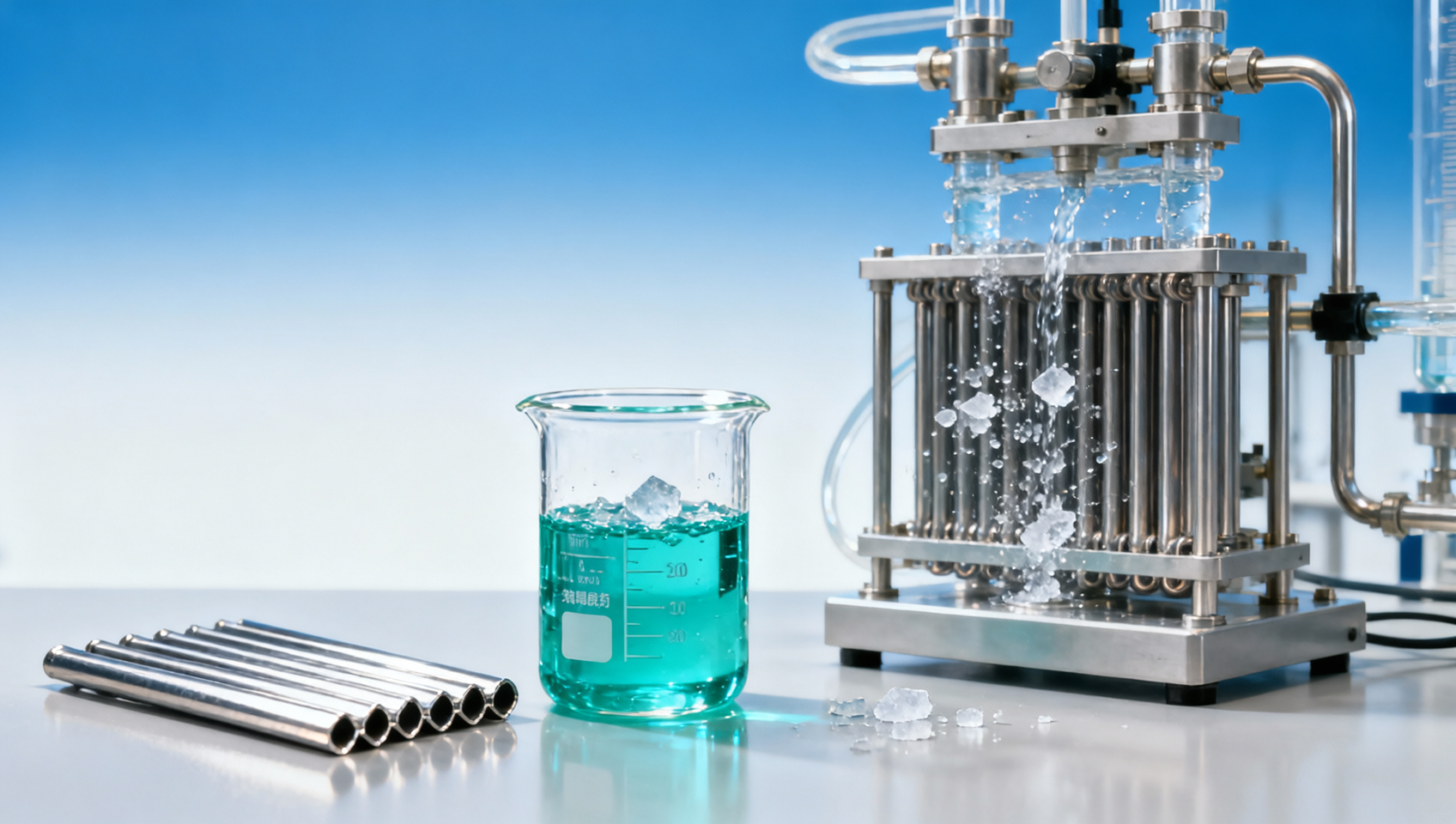
Why Antiscalants Performance Matters More in High-Hardness Systems
In high-hardness water systems, scale can form fast and become expensive even faster. That is why judging Antiscalants performance needs a technical, practical, and application-based approach.
Basic dosage data is not enough. A product may look good on paper but fail once calcium, alkalinity, temperature, and pH rise together.
For phosphate-related water treatment programs, this point is even more important. Phosphonate and phosphate-based Antiscalants must keep calcium salts dispersed without creating deposit risks elsewhere.
The most reliable judgment comes from combining lab indicators, operating conditions, and system-specific verification. That gives a much clearer picture of real Antiscalants performance.
Start with the Most Useful Technical Checks
When comparing Antiscalants, it helps to focus on a few indicators first. These are the checks that usually reveal whether a formulation is suitable for high-hardness duty.
- Check calcium carbonate inhibition under target concentration cycles, not under mild lab water only. Realistic saturation conditions show whether Antiscalants still delay crystal growth effectively.
- Review calcium tolerance carefully. Some Antiscalants lose stability when calcium rises, causing turbidity, precipitation, or reduced phosphate-based performance during continuous operation.
- Confirm dispersion ability for iron, silt, and microcrystals. Good Antiscalants should not only inhibit scale, but also keep deposits suspended and less likely to settle.
- Test performance across pH range and temperature range. A product that performs well at room temperature may weaken sharply in hotter alkaline systems.
- Look at compatibility with corrosion inhibitors, biocides, and oxidants. Some Antiscalants perform well alone but become unstable after blending into a full treatment program.
- Measure residual stability after circulation time. Strong initial inhibition is helpful, but stable Antiscalants must maintain activity after hydrolysis, shear, and long residence time.
A quick comparison table for technical review
Judge Antiscalants by Conditions, Not by Name Alone
Two products may both be sold as Antiscalants, yet behave very differently in the same system. Formulation chemistry matters, especially in phosphate and phosphonate-based programs.
For example, one product may be excellent against calcium carbonate but weak against calcium phosphate or mixed deposits. Another may have good dispersion but limited oxidant resistance.
This is why technical review should always begin with deposit type. If the main risk is carbonate scaling, evaluation can focus there. If phosphate deposition is possible, the review must go further.
Points that are often missed during evaluation
- Do not judge Antiscalants only by standard static bottle tests. Dynamic flow and heat-transfer conditions often reveal deposit behavior hidden by simple bench screening.
- Watch for phosphate-related precipitation windows. In some chemistries, poor dosage control or pH drift can shift Antiscalants from protection into deposit contribution.
- Include concentration factor changes in the review. Antiscalants that perform at three cycles may struggle badly once the system pushes toward five or six.
- Check makeup water fluctuation, not just average analysis. Seasonal hardness or alkalinity peaks are common reasons why acceptable Antiscalants suddenly appear to fail.
How to Test Antiscalants Performance in a Practical Way
A useful evaluation plan does not need to be complicated. It just needs to match the actual operating window as closely as possible.
Start with water analysis. Confirm hardness, alkalinity, pH, conductivity, silica, iron, and temperature range. If phosphate species are present, include them in the scaling risk review.
Then compare candidate Antiscalants at equal active dosage. Keep test conditions consistent so the result reflects chemistry, not setup differences.
A simple execution sequence that works well
- Screen candidates in synthetic water that matches the expected hardness, alkalinity, and pH. This gives an early filter before moving to more time-consuming trials.
- Repeat testing with real site water. Trace iron, suspended solids, and organics can change Antiscalants performance more than many initial screenings suggest.
- Run thermal stability or heated coupon testing if exchangers are involved. Heat can accelerate crystal growth and expose hidden weakness in some formulations.
- Track turbidity, residual phosphorus or active content, and deposit weight together. One number alone rarely explains whether Antiscalants are truly performing well.
- Compare treated and blank samples visually and analytically. Crystal appearance, settling rate, and wall adhesion often provide early warnings before severe fouling occurs.
Different Operating Situations Need Different Judgments
In industrial circulating water, high concentration cycles usually make calcium carbonate the first concern. Here, Antiscalants should be checked for threshold inhibition and long circulation stability.
If the system also carries iron or suspended matter, dispersion becomes just as important as inhibition. A product that prevents crystal growth but allows sludge deposition is not a complete solution.
In wastewater reuse or mixed-source water, composition shifts more often. Antiscalants should be judged on tolerance to fluctuating hardness, alkalinity, and contaminants, not just on ideal design values.
For systems with phosphate-related treatment chemistry, there is an added balance to manage. Antiscalants need to control scaling while staying compatible with broader corrosion and deposition control targets.
Common Risks Behind Misjudged Antiscalants Performance
A very common mistake is selecting on price per kilogram only. In practice, poor Antiscalants can raise cleaning frequency, shorten run length, and increase energy loss.
Another frequent issue is overreliance on supplier standard data. Generic test reports are useful, but they do not replace verification under site-specific hardness and phosphate conditions.
There is also a dosage trap. Higher dosage does not always mean better Antiscalants performance. In some phosphate-containing systems, excess addition may disturb chemistry balance or economics.
Finally, do not ignore storage and product consistency. Stable Antiscalants performance depends on controlled production, reliable raw materials, and verified batch quality.
What Strong Technical Support Should Look Like
Good product selection is not only about the molecule. It is also about whether the supplier can support testing, interpretation, and adjustment during application.
Shandong GTECH Chemicals Co., Ltd., located in Jinan, Shandong, China, works in water treatment chemicals, environmental protection products, and related technical services.
With standardized production facilities and professional testing laboratories, the company supports product stability and performance verification. This matters when judging phosphate and phosphonate-based Antiscalants in demanding systems.
Years of industry experience across circulating water, wastewater treatment, municipal water, petrochemical, power, papermaking, and metallurgy also help connect lab data with field conditions.
When comparing support capability, focus on these points
- Ask whether the evaluation includes actual water chemistry review, deposit prediction, and dosage window analysis. Strong Antiscalants support should go beyond sending a product sheet.
- Confirm laboratory capability for stability, compatibility, and performance testing. Reliable judgment improves when phosphate-related chemistries are tested under controlled, repeatable conditions.
- Check whether production quality management is consistent. Even good Antiscalants formulas lose value if batch variation changes active content or application behavior.
- Look for solution customization, not only catalog supply. High-hardness systems often need Antiscalants matched to scaling species, operating cycles, and treatment program structure.
A Clear Way to Make the Final Judgment
To judge Antiscalants performance well, keep the process simple and disciplined. Define the scale risk, test under realistic conditions, and compare more than one indicator.
The best result is not necessarily the lowest dosage or the lowest price. It is the option that holds stability, controls deposits, fits phosphate-related chemistry, and supports long operating cycles.
If the system water changes often, test with those fluctuations included. If heat transfer is critical, include heated conditions. If calcium is extreme, verify tolerance before field use.
That approach makes Antiscalants selection more accurate and much less risky. The next practical step is to review actual water data, shortlist candidates, and validate performance with targeted testing.
Navigation
- What to Check Before Switching Filming Agents Suppliers
- Filming Agents Adoption Grows in Asset Protection Projects
- Dispersants for Slurry Systems: Key Signs of Underperformance
- Dispersants Selection Mistakes That Raise Operating Costs
- Chelating Agents vs Alternatives for Stable Process Quality
- Chelating Agents in Cleaning Formulas: What Changed in 2026
Send Us A Message