
News
Shandong GTECH Chemicals – Jinan-based water treatment supplier. Full-range products, stable quality, customized services. Trusted globally. Partners welcome.
New Corrosion Inhibitors Risks in Closed Loop Cooling
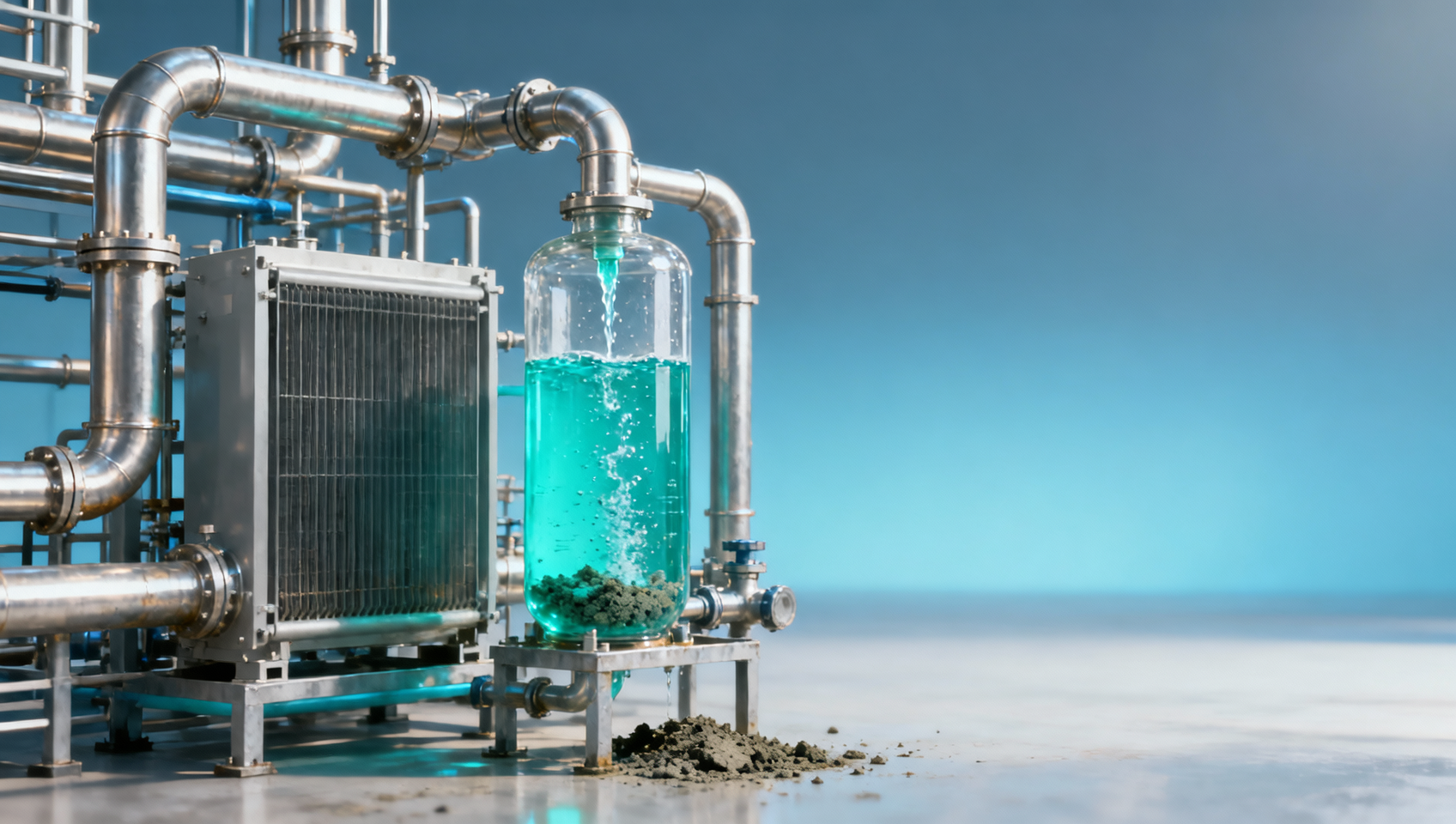
Why do new Corrosion Inhibitors create concern in closed loop cooling?
As industries evaluate new Corrosion Inhibitors for closed loop cooling systems, understanding their potential risks is essential for both quality control and safety management.
From chemical compatibility and system stability to operational compliance, careful selection can prevent costly failures and long-term performance issues.
This article explores the key concerns and practical considerations behind safer inhibitor use.
Closed loop cooling systems usually operate with low water loss, stable temperature ranges, and limited contamination exchange.
That stability can create a false sense of safety when introducing new Corrosion Inhibitors.
A formulation that performs well in open recirculating water may behave differently in a sealed loop.
In the phosphate industry, this issue matters because phosphate-based inhibitors remain common in corrosion control programs.
Phosphates can support metal passivation, but they may also interact with hardness, pH, oxygen ingress, and microbial changes.
When a new product enters service without system review, hidden risks often emerge later.
What are the main chemical risks of new Corrosion Inhibitors?
The first risk is incompatibility with existing water chemistry.
New Corrosion Inhibitors may shift pH, buffering capacity, or ionic balance beyond the original operating window.
In phosphate programs, overdosing can increase deposition risk, especially where calcium or iron contamination enters the loop.
Precipitated phosphate solids can reduce heat transfer and block narrow passages.
Another concern is mixed-metal behavior.
Closed loops often contain carbon steel, copper alloys, stainless steel, aluminum, or solder.
Some Corrosion Inhibitors protect steel well but weaken copper protection.
Others may accelerate galvanic effects when inhibitor films form unevenly.
Film-forming chemistry also deserves attention.
If the protective layer develops too slowly, startup corrosion can occur before passivation becomes effective.
If the film becomes too thick, deposit undercutting may start beneath the treated surface.
- Phosphate precipitation under hardness contamination
- Copper incompatibility with certain inhibitor blends
- pH drift after product replacement
- Unexpected solids from mixing old and new stock
How can system conditions make Corrosion Inhibitors fail?
Closed loop cooling performance depends on more than product chemistry.
The same Corrosion Inhibitors can show very different results under different operating conditions.
Low flow areas are a common problem.
Branches, jackets, expansion tanks, and idle lines may receive limited inhibitor contact.
That creates localized corrosion even when bulk test values look acceptable.
Oxygen ingress is another critical factor.
A small leak, faulty seal, or frequent makeup can convert a low-oxygen loop into a more aggressive environment.
Some phosphate-based Corrosion Inhibitors tolerate oxygen variation better than others.
Temperature also changes inhibitor behavior.
High surface temperature can intensify scaling, while lower temperatures may slow passivation reactions.
Microbial activity should not be ignored in closed loops.
Although less exposed than open systems, stagnant sections can support biofilm growth.
Biofilms create under-deposit zones where Corrosion Inhibitors lose effectiveness.
Typical operating warning signs
- Iron levels rising after inhibitor change
- Cloudy water or fine suspended solids
- Frequent venting or unexplained pressure shifts
- Localized leaks near low-flow sections
How should phosphate-based Corrosion Inhibitors be evaluated before use?
A safe decision starts with a full system profile.
Review metallurgy, water volume, temperature range, pressure, makeup source, and contamination history.
Then compare the new inhibitor with the previous treatment program.
Do not assume equivalent performance from similar labels.
For phosphate products, several questions are essential.
- Is the phosphate level designed for true closed loop conditions?
- Does the formulation include copper protection if yellow metals are present?
- What pH range is required for stable corrosion control?
- How does the product handle oxygen entry or hardness contamination?
- Can the inhibitor be monitored with practical field tests?
Jar testing and pilot simulation can reveal incompatibility before full conversion.
Coupon testing remains useful for comparing corrosion rates across metals.
A phased changeover is often safer than immediate replacement.
This approach helps confirm dosage, monitoring frequency, and cleanup needs.
What mistakes increase compliance, safety, and cost risks?
One frequent mistake is focusing only on unit price.
Cheaper Corrosion Inhibitors may trigger higher maintenance, flushing, downtime, and metal loss costs.
Another mistake is skipping document review.
Safety data, regulatory status, storage requirements, and discharge considerations must all be checked.
Even in closed systems, blowdown, cleaning waste, or accidental release can create environmental obligations.
Poor monitoring is equally risky.
Without trend data, operators may miss early evidence of corrosion, scaling, or inhibitor depletion.
A practical control plan should track:
- pH and conductivity
- Phosphate residual or active inhibitor level
- Iron and copper indicators
- Suspended solids and clarity changes
- Makeup frequency and oxygen entry signs
Training gaps can also undermine treatment results.
If dosing, sampling, or transition procedures are unclear, even strong Corrosion Inhibitors may appear ineffective.
Which comparison points help choose safer Corrosion Inhibitors?
A structured comparison prevents rushed decisions.
The table below highlights practical questions for phosphate-related selection.
Quick FAQ summary
What practical steps support safer implementation?
Safer use of Corrosion Inhibitors begins with disciplined evaluation, not product substitution alone.
For phosphate-based treatment, stable performance depends on correct dosage, metal compatibility, contamination control, and ongoing monitoring.
A useful implementation sequence is simple.
- Audit loop design, metallurgy, and water history
- Review technical data for the proposed Corrosion Inhibitors
- Run compatibility and corrosion tests
- Apply phased startup with tighter sampling
- Adjust based on trend results, not assumptions
Shandong GTECH Chemicals Co., Ltd. focuses on research, production, sales, and technical service for water treatment chemicals and environmental protection products.
With standardized facilities, testing laboratories, and water treatment experience, the company supports stable and reliable product performance.
Located in Jinan, Shandong, China, it provides cost-effective products and customized water treatment solutions for diverse industrial applications.
When evaluating closed loop cooling chemistry, careful technical review can reduce risk and improve long-term system life.
The next step is to compare current loop conditions with the selected inhibitor program and confirm fit before full adoption.
Navigation
- What to Check Before Switching Filming Agents Suppliers
- Filming Agents Adoption Grows in Asset Protection Projects
- Dispersants for Slurry Systems: Key Signs of Underperformance
- Dispersants Selection Mistakes That Raise Operating Costs
- Chelating Agents vs Alternatives for Stable Process Quality
- Chelating Agents in Cleaning Formulas: What Changed in 2026
Send Us A Message